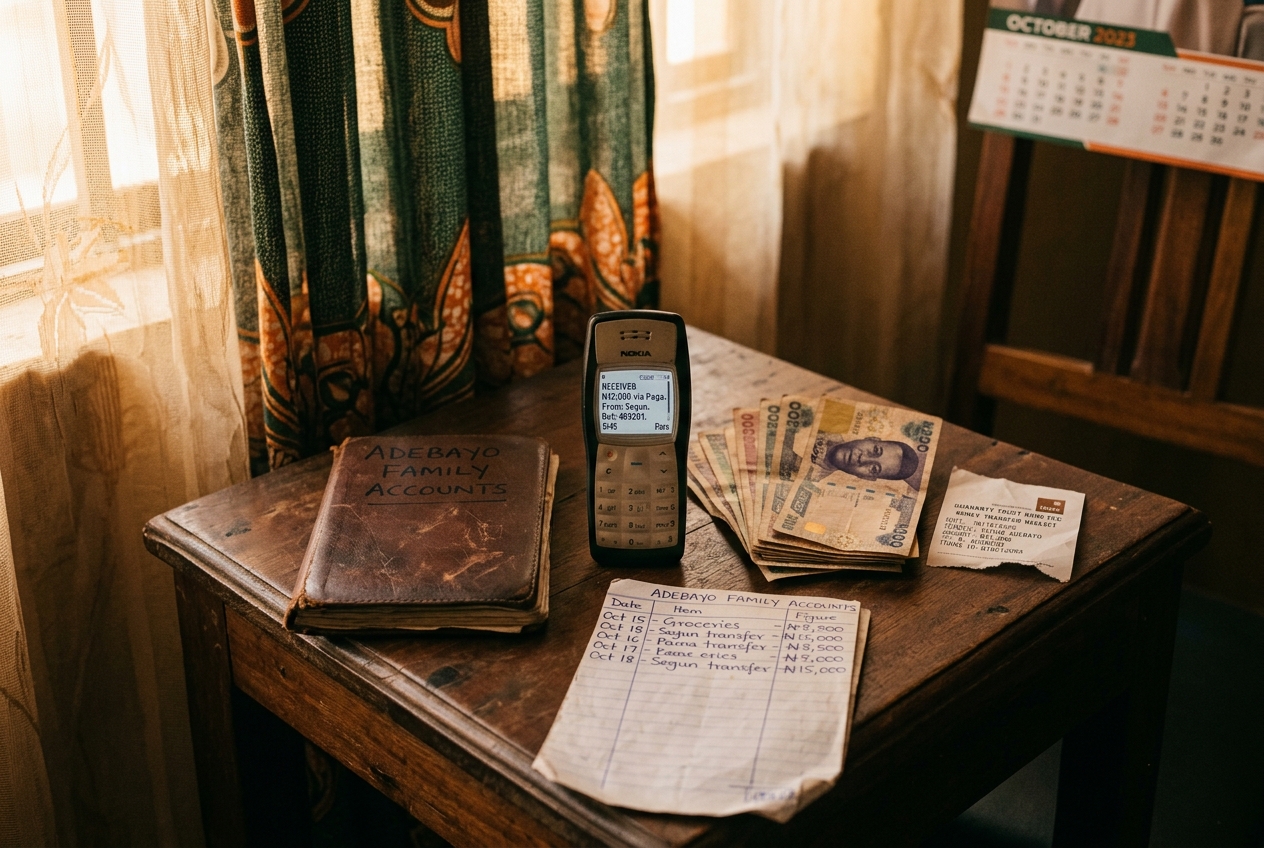
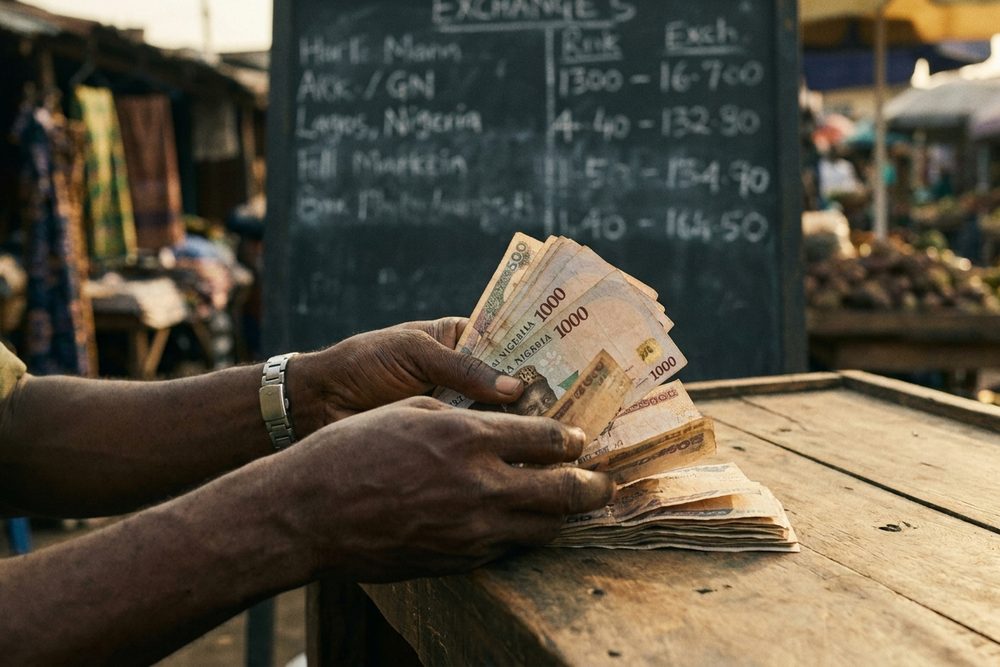
If you were in Lagos in the last week of March 2020, you remember the sound the city made when it stopped. On Sunday the 29th, the President announced that Lagos, Abuja and Ogun would lock down at 11pm the following night. The next morning, a paint bucket of garri that had sold for five or six hundred naira in Oyingbo market was already selling for eight hundred, then a thousand, then thirteen hundred. A tuber of yam that had cost seven hundred naira crossed a thousand. By the first week of April, THISDAY was reporting that staple prices had climbed between eighty and one hundred and twenty percent in a single week, and the National Bureau of Statistics would later put April's food inflation at 15.03 percent, a two-year high. The lockdown was a public health measure. The market stall was where the economy announced itself.
At the same time, in a different set of cities, another group of Nigerians was losing the means to send. In the United States, 20.5 million jobs disappeared in April 2020 and unemployment reached 14.7 percent, the worst reading since the Great Depression. In Canada, unemployment hit 13 percent. In the United Kingdom, 9.4 million jobs, more than a quarter of the workforce, were parked on furlough. Those three countries are not random entries in a list. Together they hold most of Nigeria's remittance-sending diaspora, with the United States and the United Kingdom alone accounting for roughly 60 percent of the flows, according to the World Bank. When the sender's paycheque stops, the transfer stops. There is no buffer and no appeal.
A household that relies on a transfer from abroad is, in effect, short the American labour market, the British labour market, and the Canadian labour market, all at once, without ever having agreed to the position.
The numbers, when they came, were stark. The Central Bank of Nigeria's own count of direct remittances fell by 50.47 percent in a single month, from 2.05 billion dollars in January 2020 to 1.02 billion dollars in February, as reported by the Daily Times in June 2020. By the second quarter, inflows had dropped to 3.3 billion dollars, the lowest quarter since 2008, according to Nairametrics. For the full year, the World Bank's Migration and Development Brief 34 recorded a 27.7 percent decline, from 23.81 billion dollars in 2019 to 17.21 billion dollars in 2020. The October 2020 forecast had projected a far milder fall. The reality beat the worst case.
The oil market was delivering its own shock on the same calendar. On 20 April 2020, the price of a barrel of West Texas Intermediate crude settled at minus 37.63 dollars, the first negative close in history. Brent crude, the benchmark Nigeria's budget actually watches, fell below twenty dollars. The naira, which had held an official rate near 360 to the dollar through March, was adjusted twice in 2020: from 307 to 360 in March, then from 360 to 381 in July, according to FMDQ data reported by Punch. On the parallel market, where a household actually buys dollars, the rate blew past 400 in late March and kept going.
What was coming, for a household that runs on a transfer, is not a mystery. The school fees, the rent, the medical bill, the food budget: each one has a month attached. When the transfer pauses for three months, the question is not whether the family is grateful for the money. It is which obligation moves first. In most houses the answer is the same set of moves in the same order. Savings, if there are any. Then borrowing from people. Then selling something. The transfer was acting as the household's entire financial cushion, which means the household never really had one.
The recovery, when it arrived, came from the same direction as the collapse. The World Bank's May 2022 brief recorded Nigeria's 2021 inflows at 19.2 billion dollars, up 11.2 percent on the year. The drivers the Bank named were the Central Bank's Naira4Dollar scheme, which paid recipients five naira for every dollar received through official channels, and the stabilisation of the naira in the 410 to 415 band. Even after the rebound, inflows stayed below the pre-pandemic average of roughly 23 billion dollars. The scar tissue is part of the story.
That is why the present moment is worth reading carefully. As of mid-August 2026, prediction markets put the odds of a United States recession beginning before the end of the year in the single digits. Kalshi's 2026 recession contract touched an all-time low of 8 percent in early July and traded around 5 to 8 percent through the middle of August. Polymarket's equivalent contract sat near 7.5 percent on 23 August. These are not forecasts. They are prices, and prices can be wrong. But they are the prices of people who lose money when they are wrong, and right now those people are pricing calm.
The naira, for its part, is holding near 1,349 to the dollar as of mid-August 2026, a five-month high, according to BusinessDay. The Central Bank's foreign reserves crossed 52.5 billion dollars in mid-July, a seventeen-year high, and reached 52.66 billion dollars on 19 August, according to Nairametrics. The gap between the official rate and the parallel rate has narrowed to under fifty naira, a spread that would have been unthinkable in the 2024 scramble. The pressure that squeezes a Nigerian household from abroad has, for now, eased.
None of this means the exposure is gone. It means the exposure is priced as unlikely. A household that relies on a transfer from abroad is, in effect, short the American labour market, the British labour market, and the Canadian labour market, all at once, without ever having agreed to the position. That is not a reason to panic. It is a reason to know the map. The month the money did not come in 2020 was not a Nigerian failure. It was a transmission line, working exactly as built. The same line runs in both directions, and it is still live.
The video this piece accompanies walks through the full argument, from the 28 percent remittance fall to the oil price collapse to the three channels that carry a foreign recession into a Nigerian kitchen. This page exists for the part the research had to compress: the market stall in Oyingbo, the queue outside the bureau de change, the family that learned in April 2020 that its cushion was made of someone else's paycheque. You were not just watching a global pandemic. You were watching the price of dependence, itemised in garri.
Sources
- Nigeria lockdown announcement and dates, Lagos, Abuja and Ogun, 29 March 2020. Anadolu Agency Published 29 Mar 2020. Accessed 24 Aug 2026.
- Food price increases in Lagos markets during the first week of lockdown. Punch Published 18 Apr 2020. Accessed 24 Aug 2026.
- Staple prices up 80 to 120 percent one week into the lockdown. THISDAY Published 6 Apr 2020. Accessed 24 Aug 2026.
- April 2020 food inflation at 15.03 percent, a two-year high. The Guardian Nigeria Published 7 Jun 2020. Accessed 24 Aug 2026.
- United States job losses and unemployment in April 2020. BBC Published 8 May 2020. Accessed 24 Aug 2026.
- United Kingdom furlough figures under the Coronavirus Job Retention Scheme. GOV.UK Published 8 Jul 2020. Accessed 24 Aug 2026.
- United States and United Kingdom share of remittances to Nigeria, roughly 60 percent. Nairametrics Published 19 May 2023. Accessed 24 Aug 2026.
- CBN direct remittances fell 50.47 percent from January to February 2020. Daily Times Nigeria Published 15 Jun 2020. Accessed 24 Aug 2026.
- Nigeria Q2 2020 remittances at the lowest level since 2008. Nairametrics Published 12 Oct 2020. Accessed 24 Aug 2026.
- World Bank Migration and Development Brief 34: remittances to Nigeria fell 27.7 percent in 2020. World Bank Published 12 May 2021. Accessed 24 Aug 2026.
- WTI crude oil settled at minus 37.63 dollars on 20 April 2020. Reuters Published 20 Apr 2020. Accessed 24 Aug 2026.
- Brent crude June contract closed at 19.33 dollars on 21 April 2020. U.S. Energy Information Administration Published 27 Apr 2020. Accessed 24 Aug 2026.
- CBN adjusted the official naira rate to 381 in July 2020. Punch Published 8 Jul 2020. Accessed 24 Aug 2026.
- World Bank Migration and Development Brief 36: Nigeria 2021 remittances revised to 19.2 billion dollars, up 11.2 percent. Tribune Published 16 May 2022. Accessed 24 Aug 2026.
- Kalshi 2026 recession odds at an all-time low of 8 percent in early July 2026. PolyPunter Published 4 Jul 2026. Accessed 24 Aug 2026.
- Polymarket US recession by end of 2026 contract at 7.5 percent on 23 August 2026. CryptoSlate Published 23 Aug 2026. Accessed 24 Aug 2026.
- Naira at a five-month high of 1,349.54 to the dollar on 17 August 2026. BusinessDay Published 17 Aug 2026. Accessed 24 Aug 2026.
- CBN foreign reserves crossed 52.5 billion dollars in mid-July 2026, a seventeen-year high. Punch Published 18 Aug 2026. Accessed 24 Aug 2026.
- Nigeria external reserves reached 52.66 billion dollars on 19 August 2026. Nairametrics Published 24 Aug 2026. Accessed 24 Aug 2026.
Spotted something wrong? Report a correction. Every fix is logged in the open corrections record.