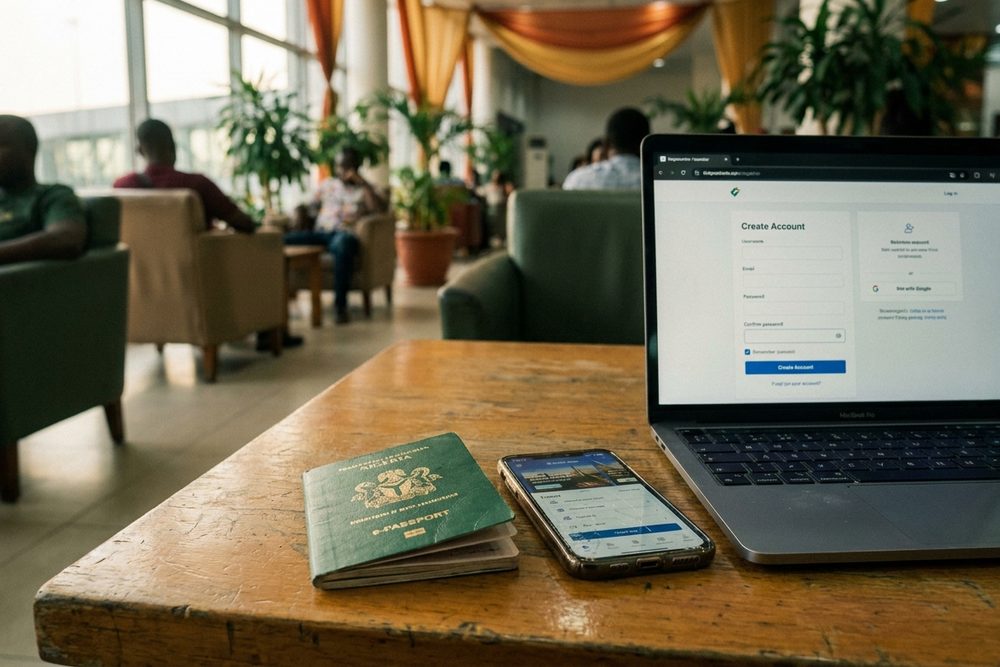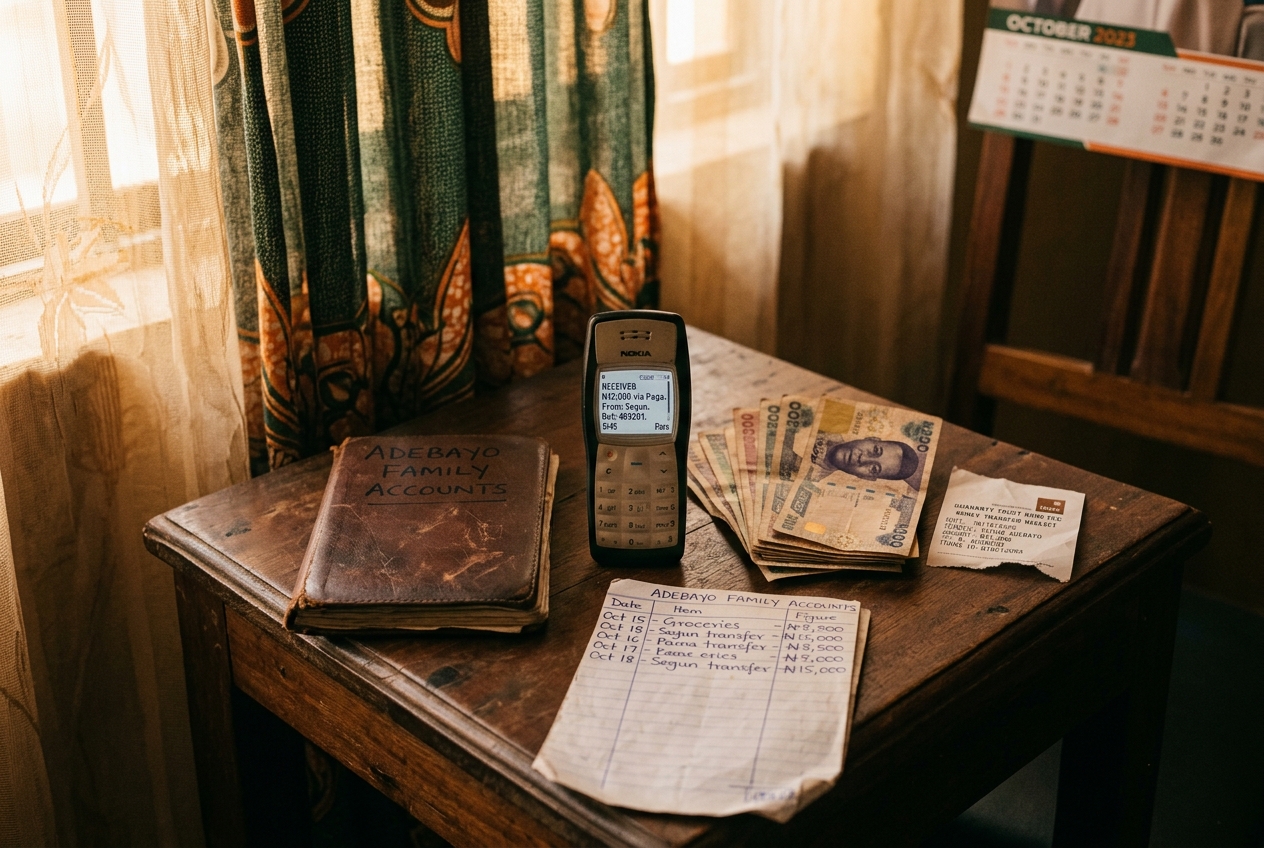
If you grew up in Nigeria in the late 1990s or 2000s and somebody in your family worked abroad, you knew the ritual without anybody explaining it. A text message would land with a ten digit number, the Money Transfer Control Number. Somebody would dress for the bank the way you dress for an occasion, because the Western Union counter inside the branch was its own small ceremony. You joined a queue. You presented an identity document and the number. If the name on the transfer did not match the name on the ID to the letter, you did not collect the money that day. The first transfer could take days to clear. Once a sender and a receiver were known to the system, the same route settled within hours.
That era had a shape that is easy to forget now that an app can move the same money in minutes. Western Union launched in Nigeria in 1995, from a single First Bank location in Lagos, and by its twentieth anniversary in 2016 it had more than 5,200 walk in agent locations across all 36 states. For most of that period the money arrived as dollars, collected over the counter or paid into a domiciliary account, the foreign currency account at a licensed Nigerian bank that let a household hold the transfer in dollars and convert it when it chose. The transfer was not just money. It was a plan, running on a schedule the whole house understood.
The transfer was acting as the household's entire financial cushion, which means the household never really had one.
The state has always wanted that money inside the formal system, because the sums are large enough to matter to the whole country, not just to one family. The World Bank put remittances to Nigeria at 19.5 billion dollars in 2023 and roughly 21 billion dollars in 2024, about four times the foreign direct investment the country attracted that year. In March 2021 the Central Bank tried paying for formality directly, offering five naira for every dollar received through licensed operators under the Naira4Dollar scheme, a programme it ended on 30 June 2023. Then, on 1 May 2026, a new rule took effect that changed what the receiver actually holds: a circular dated 24 March 2026, signed by Dr. Musa Nakorji, the Central Bank's director of Trade and Exchange, ordered every international money transfer operator to settle remittances through naira accounts at authorised banks. The era of picking up the transfer as dollars is, in the formal channel, over. The money now lands as naira, converted at the official rate.
So the money home in 2026 is naira arriving in a Nigerian account, from a sender whose own position abroad is often less secure than the family at home assumes. That is the part the video this piece accompanies takes seriously. In June and July 2026, after a wave of anti immigration violence in South Africa, Nigeria evacuated its citizens home. The first flight landed in Lagos on 11 June with 268 returnees. By the final flight on 15 July, the foreign ministry put the total brought home at about 1,490 people. Each of those people was, in many cases, a sender. When the sender's life is uprooted, the transfer does not shrink politely. It stops, all at once, on a date nobody at home chose.
What happens next is not mysterious, because a household that runs on a transfer has usually arranged itself around it. The school fees, the rent, the medical bill, the food budget, the small business restock: each one has a month attached. When the transfer pauses for three months, the question is not whether the family is grateful for the money. It is which obligation moves first, and what fills the gap. In most houses the answer is the same set of moves in the same order. Savings, if there are any. Then borrowing from people. Then selling something. The transfer was acting as the household's entire financial cushion, which means the household never really had one.
This is the point where the conversation usually turns into advice, and it is more honest to keep it as description. The reason a stopped transfer hurts so much is that the money was consumed as income the moment it arrived. Nothing about it was building anything. A growing number of diaspora Nigerians have started treating one part of the monthly amount differently: not as money to be spent at home, but as money to be put to work at home, redirected into broad Nigerian funds that hold many companies at once and grow with those businesses over years. The rest of the transfer still pays the bills. But a slice of it is quietly building a second source of naira inside the country, one that does not depend on the sender's job, the sender's visa, or the sender's safety.
That slice is the real subject here. A household with its own small pile of productive naira assets experiences a stopped transfer as a hard season. A household without one experiences it as an emergency. The transfer itself is not the flaw. Nigerians abroad have carried families at home for decades and will keep doing it. The flaw is a structure in which the transfer is the only thing standing between a family and the gap. The evacuation flights of June and July 2026 were an extreme version of a risk that is always present, because any single sender can lose work, fall ill, or be forced home. The money home matters most not when it arrives, but on the month it does not.
Sources
- Western Union launched in Nigeria in 1995, with First Bank as its first agent. Nigerian CommunicationsWeek Published 18 Aug 2014. Accessed 3 Aug 2026.
- Western Union's 20th anniversary: more than 5,200 agent locations across 36 states. THISDAY Published 6 Nov 2016. Accessed 3 Aug 2026.
- Legacy transfer experience: queues, paperwork, a first transfer taking up to five days. Business Hallmark Published 8 Jan 2024. Accessed 3 Aug 2026.
- How domiciliary accounts work for receiving and holding US dollars in Nigeria. TechCabal Published 24 Sep 2020. Accessed 3 Aug 2026.
- Nigeria received about 19.5 billion dollars in remittances in 2023. World Bank, Migration and Development Brief 40, via New Telegraph Published 26 Jun 2024. Accessed 3 Aug 2026.
- 2024 remittances of about 20.9 billion dollars, roughly four times foreign direct investment. NiDCOM / Presidency, via PM News Published 26 Jul 2025. Accessed 3 Aug 2026.
- CBN Naira4Dollar scheme, five naira per dollar received, from March 2021. Nairametrics Published 6 Mar 2021. Accessed 3 Aug 2026.
- CBN ended the Naira4Dollar scheme effective 30 June 2023. TheCable Published 14 Jun 2023. Accessed 3 Aug 2026.
- CBN directive of 24 March 2026 ordering naira-only settlement of remittances, effective 1 May 2026. TheCable Signed by Dr. Musa Nakorji, Director, Trade and Exchange. Accessed 3 Aug 2026.
- First evacuation flight from South Africa landed in Lagos 11 June 2026 with 268 returnees. BBC Published 11 Jun 2026. Accessed 3 Aug 2026.
- Nigeria brought home about 1,490 citizens from South Africa by the final flight on 15 July 2026. Federal Ministry of Information Published 15 Jul 2026. Accessed 3 Aug 2026.
Spotted something wrong? Report a correction. Every fix is logged in the open corrections record.