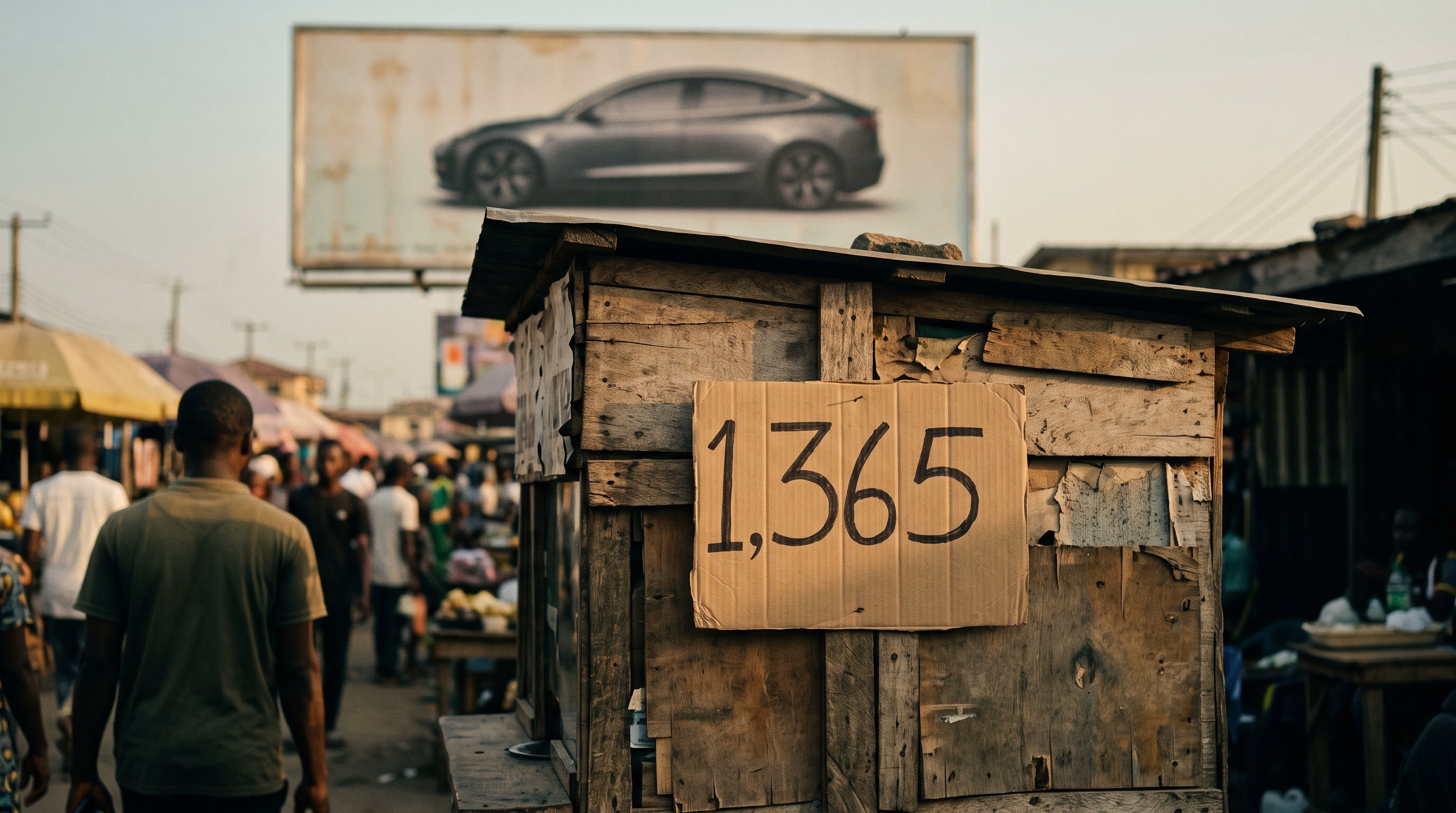
If you grew up in Nigeria, the exchange rate was never a finance page number. It was the kiosk. A small wooden stall at the edge of the market or the airport road, a man with a calculator and a wad of currencies, and a rate he wrote on a card that changed with the afternoon. Your parents did not need to be traders to know it. The rate decided what the imported medicine cost, what the tokunbo car cost, what the school fees for the cousin abroad cost. Long before anybody you knew owned a share of anything, everybody you knew owned a number: today, how much is the dollar?
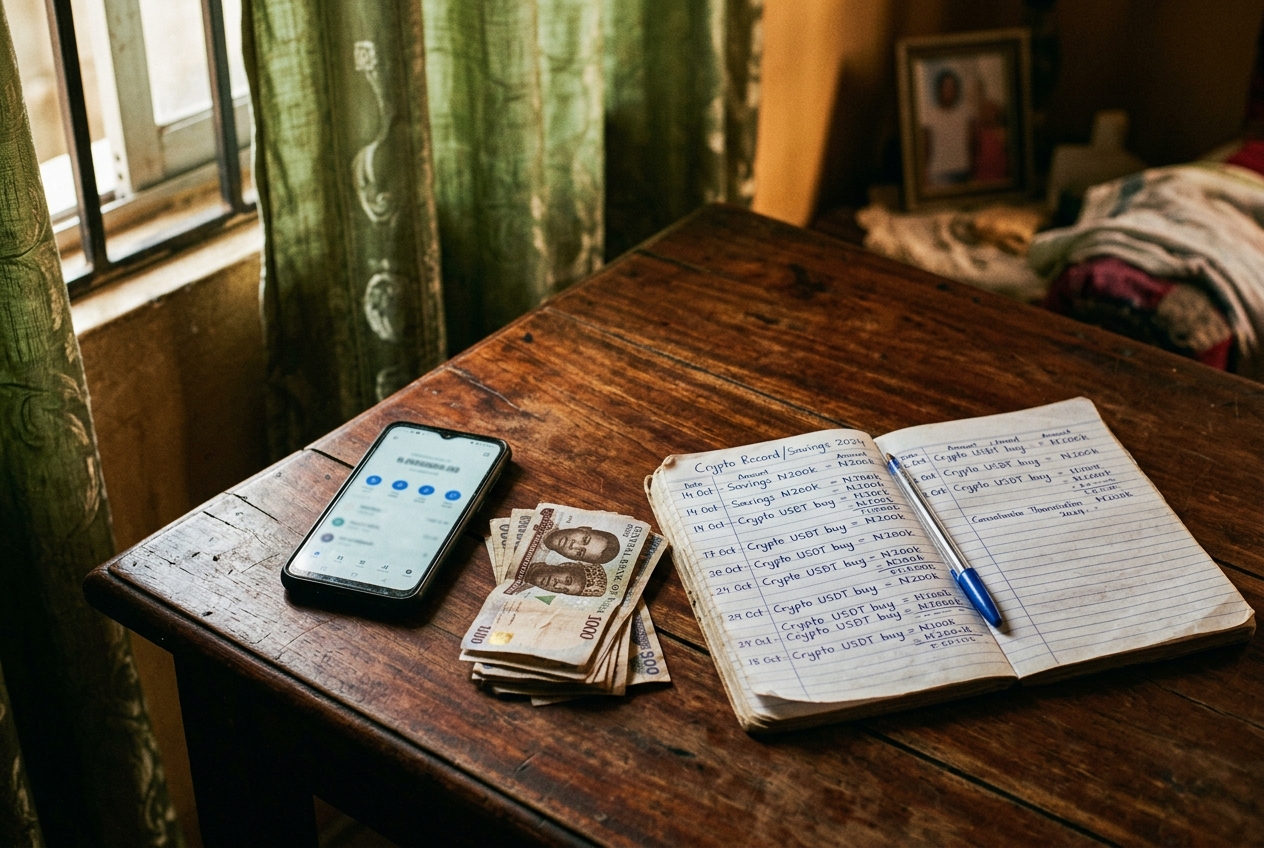
If you grew up abroad, the number arrived differently but it still arrived. It was in the phone calls about the transfer. The hundred pounds that used to cover a week of family expenses, then half a week, then a weekend, without the pounds ever changing. The rate was the weather back home: reported every day, worried over, and never once under anyone's control.
the only defence is knowing yours.
The obsession has a dated beginning. In 1985 the naira stood at about 0.89 to the dollar, stronger than the dollar itself, and oil paid for the imports that made that believable. Then oil fell, and in July 1986 the Babangida government adopted the Structural Adjustment Programme, and that September it opened the Second-tier Foreign Exchange Market, where the naira's price would be set by auction rather than by decree. The first auction priced the dollar at 4.62 naira against an official 1.57. A country that had treated the rate as a fixed fact of life watched it become an opinion. It has been an argument ever since.
The 1990s taught the next lesson: the government and the market can hold different opinions at once, for years. From 1994 the official rate sat fixed at about 22 naira to the dollar, the number in the budget speech. On the street, the autonomous market dealt at 82, 84, 87. Two prices for one currency, an official truth and a traded truth, and everyone learned which one you could actually use. That is the decade that made the parallel rate a household institution and gave the kiosk its authority.
The 2000s were the calm that made the old arguments feel settled: roughly 100 to 160 naira across a decade of oil money. Then oil fell again, and from March 2015 the central bank held the rate at 197 to 199 for over a year while the parallel market ran past 300 and, by early 2017, toward 520. The I&E window that followed settled near 360 to 380, close enough to the street that the two truths briefly became one. Then, on 14 June 2023, the bank collapsed all its windows into a single willing-buyer, willing-seller market. The rate closed that first day at 664. By 26 September 2023 the parallel market touched 1,000 for the first time. The official market followed on 8 December. As of 7 August 2026 the naira trades around 1,365 officially and about 1,400 on the street, with the central bank saying the gap between them is now under 2 percent.
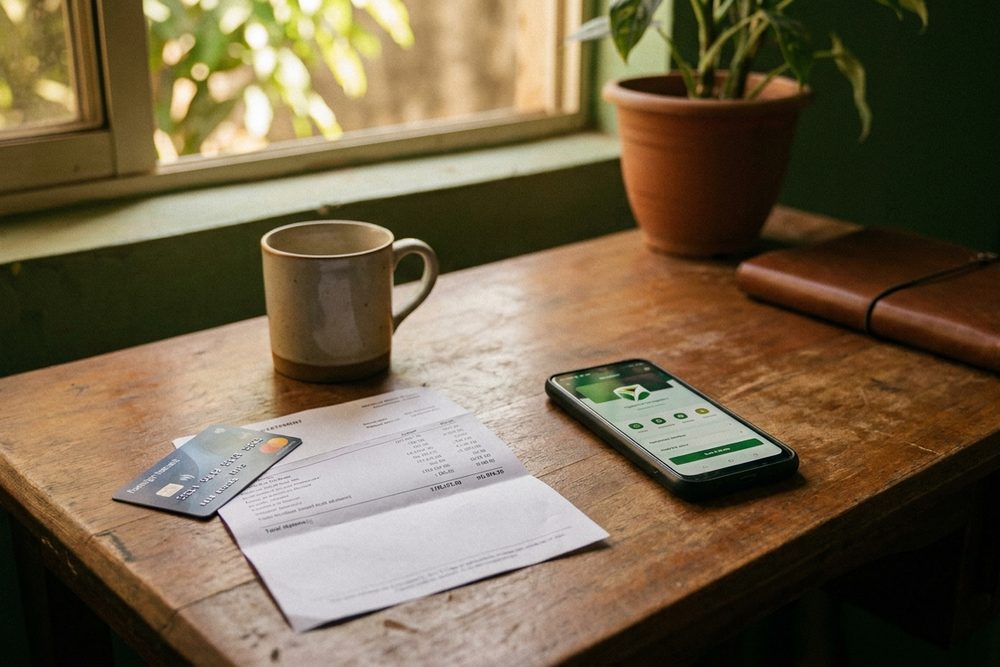
That is the history inside the thing that looks simple on your phone. Open Bamboo, Chaka, Trove or Risevest, apps that arrived around 2019 and 2020 and put American shares, Tesla included, in front of ordinary Nigerians. Tap buy on a 300 dollar share. In May 2023, at about 460 to the dollar, that share cost roughly 138,000 naira. By December, with the rate past 1,000, the same share, unchanged in dollars, cost over 300,000 naira. The naira price of an American asset is not one price. It is the dollar price multiplied by a number with forty years of history, and in Nigeria there have usually been two or three versions of that number at once.
And the rate the app quotes is not always the rate the app charges. The layers are plain once they are separated. First, the headline rate. Second, the conversion spread: one 2020 comparison found the apps buying dollars from you at 443 to 447 and selling to you at 454 to 456, a gap of about 2 to 3 percent that pays the platform rather than the market. Third, the fees, charged on both naira deposits and dollar trades. The check that cuts through all three costs nothing. When the transaction settles, divide the naira that left your account by the dollars that arrived. That is your true rate, the only one your money ever actually paid. Regulators have pushed in the same direction: the SEC warned in April 2021 that these platforms were offering unregistered foreign securities, and months later a court froze their bank accounts at the central bank's request, on FX grounds. The apps survived, licensed and larger, but the lesson belongs to the buyer: in a market built on two prices, the only defence is knowing yours.
Set the whole thing side by side and the pattern is worth more than any single rate. The naira at home is running at about 1,365 to the dollar, roughly triple its June 2023 level, and foreign capital, nearly 21 billion dollars of it in the first ten months of 2025 by the central bank governor's count, is flowing in at yields a Lagos Treasury bill can pay. The Nigerian abroad runs the same arithmetic from the other direction: every transfer home is sold at the same three-layered rate, and the years when the rate was held still were the years the two prices quietly split apart. The kiosk, it turns out, was never just a kiosk. It was the first honest price in a country that often printed two. Whatever you are buying, a transfer, a Treasury bill, or a share of a car company in California, the oldest investing question in Nigeria is still the first one to ask: which rate did I actually get?
Sources
- Naira at 0.8938 per dollar in 1985, annual average. FRED / Penn World Table Exchange Rate to U.S. Dollar for Nigeria series. Accessed 10 Aug 2026.
- SAP adopted July 1986; SFEM opened 26 September 1986. Central Bank of Nigeria CBN history of foreign exchange management. Accessed 10 Aug 2026.
- First SFEM auction at N4.6174 to the dollar against an official N1.5731. Central Bank of Nigeria Economic and Financial Review CBN review of the 1986 deregulation. Accessed 10 Aug 2026.
- Official N22 held from 1994 while autonomous and parallel markets dealt at N82 to N88. Dubawa Fact-check using CBN rate data. Accessed 10 Aug 2026.
- CBN held 197 to 199 from March 2015; parallel market at 370 at the June 2016 float. BBC News Report on the 2016 float. Accessed 10 Aug 2026.
- 14 June 2023: all FX windows collapsed into the I&E window, rate closed at N664.04. Nairametrics Day-one report on the unification. Accessed 10 Aug 2026.
- Parallel market touched N1,000 on 26 September 2023. TheCable Same-day report. Accessed 10 Aug 2026.
- Official market first closed above N1,000 on 8 December 2023. Nairametrics Year-end NAFEM review. Accessed 10 Aug 2026.
- Naira around N1,365 officially at 7 August 2026; CBN says official to BDC gap under 2 percent, reserves above 52.5 billion dollars. Nairametrics CBN governor comments, 5 Aug 2026. Accessed 10 Aug 2026.
- Bamboo, Chaka, Trove and Risevest opened US shares to Nigerians around 2019 and 2020. Rest of World Feature on Nigeria's investing app boom, March 2022. Accessed 10 Aug 2026.
- 2020 comparison: apps bought dollars at 443 to 447 and sold at 454 to 456, a spread of about 2 to 3 percent. Nairastack on Medium Cross-app rate comparison, June 2020. Accessed 10 Aug 2026.
- SEC Nigeria circular of 8 April 2021 on unregistered platforms offering foreign securities. Securities and Exchange Commission, Nigeria Primary circular. Accessed 10 Aug 2026.
- Court froze accounts of Risevest, Bamboo, Chaka and Trove for 180 days at CBN's request, August 2021. TheCable Report on the 17 Aug 2021 order. Accessed 10 Aug 2026.
- Nigeria attracted 20.98 billion dollars of foreign capital inflows in the first ten months of 2025, per CBN governor Cardoso. Vanguard Report on the CIBN dinner remarks, November 2025. Accessed 10 Aug 2026.
Spotted something wrong? Report a correction. Every fix is logged in the open corrections record.