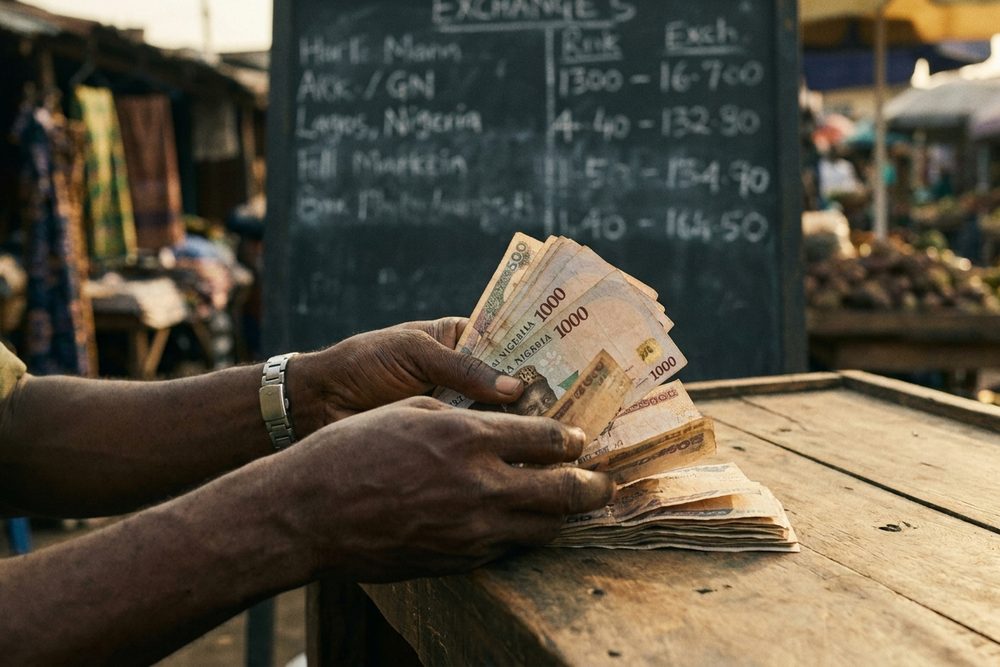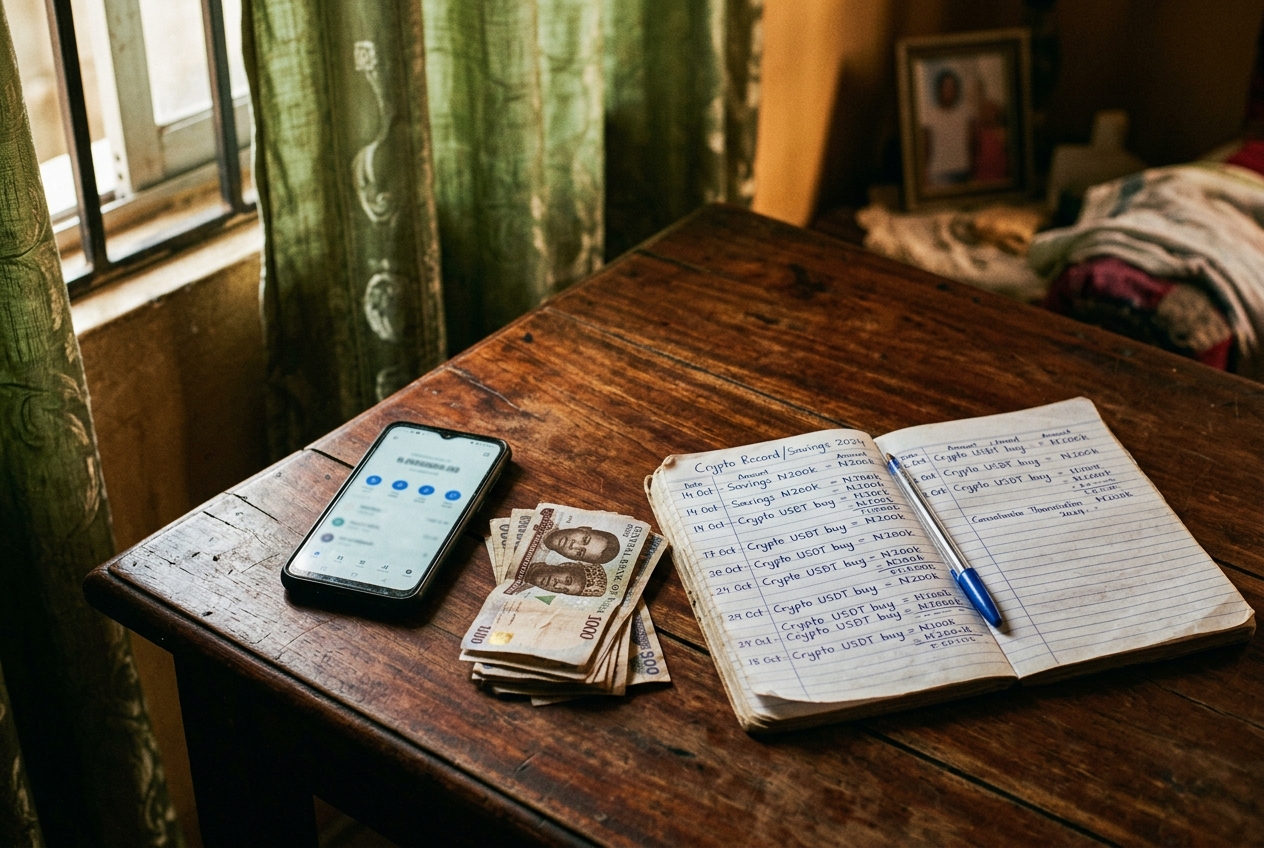
If you bought USDT any time between February 2021 and December 2023, you probably did it the way plenty of Nigerians did: not on an exchange with a bank transfer, but in a WhatsApp or Telegram group, sending naira to a stranger's account and waiting for the tokens to land in your wallet. The banks had been ordered to cut crypto off. The market went underground and kept growing anyway. On Friday 17 July 2026, ten days before this piece was published, the government that issued that order signed a new one that effectively admits what everybody already knew: the market won.
The document is the Presidential Executive Order on Virtual Assets Coordination, 2026, signed by President Bola Tinubu and effective immediately. Its own words describe what it responds to: a regulatory environment that had become fragmented as virtual assets increasingly blurred the boundaries between currencies, money, commodities and securities. The scale of what it is trying to catch up with is not small. Chainalysis counted about 92.1 billion dollars of on-chain transactions by Nigerians between July 2024 and June 2025, the largest volume in sub-Saharan Africa. The IMF estimates Nigeria received about 59 billion dollars of crypto inflows in the year to June 2024, and that the country accounts for roughly 60 percent of all stablecoin inflows into sub-Saharan Africa since 2019.
What changed on 17 July is that Nigeria stopped pretending the market was a temporary nuisance to be banned, and started treating it as a permanent feature to be governed.
What the order actually does
The order creates a Virtual Asset Council chaired by the Central Bank of Nigeria, with the Nigeria Revenue Service and the Securities and Exchange Commission as vice-chairs, and the Nigerian Financial Intelligence Unit and the Office of the National Security Adviser as members. A Virtual Asset Office, domiciled at the CBN, acts as the operational secretariat. The design point the presidency stressed most is the one worth holding on to: the order does not create a new regulator and does not transfer powers between the existing ones. Each agency keeps its statutory mandate. What changes is that they now have to coordinate, in writing, on a deadline.
Registration follows the nature of the asset and the activity. Virtual assets that count as securities register with the SEC. Payment, settlement, custody and similar services involving non-security virtual assets register with the CBN. Where responsibility is unclear, the Council resolves it. The CBN is proceeding with a regulatory sandbox, a controlled environment where eligible operators can test virtual asset products under supervision before they reach the wider market. The Nigeria Revenue Service will release a tax policy for the sector. A comprehensive Virtual Assets White Paper is being finalised to set out longer-term policy. The Council has 30 days to produce a Harmonised Implementation Framework.
The five years that led here
To understand why this order reads like a surrender, you have to hold the sequence. In February 2021 the CBN ordered banks to close accounts linked to cryptocurrency exchanges. It did not criminalise owning crypto, a point the bank's deputy governor clarified publicly the following month, but it cut the banking system off from the market. Nigerians kept trading, through peer-to-peer platforms, WhatsApp groups and informal cash agents. In December 2023 the CBN reversed course and issued guidelines allowing banks to open accounts for virtual asset service providers under conditions. In March 2024 Binance, the largest exchange serving Nigerians, pulled all naira services after its executives were detained. Then the law started catching up: the Investments and Securities Act, signed in late March 2025, recognised virtual and digital assets as securities under the SEC's watch, and the tax reform Acts signed in June 2025 brought digital asset gains into the tax net from 1 January 2026. The July 17 order is the latest and most explicit step in that catch-up.
What it means if you hold crypto
Three things are worth knowing plainly, none of them a recommendation to buy or sell anything. First, holding crypto is not and has never been illegal in Nigeria; what is changing is who supervises the platforms you use, and how. Second, the tax on crypto gains is not coming, it already started. Under the Nigeria Tax Act 2025, in force since 1 January 2026, profits and gains from digital assets are taxable income, and platforms are being brought into a reporting framework that links transactions to Tax Identification Numbers. Third, there is now a naira stablecoin in the regulated system: cNGN, incubated by the SEC in 2024 and launched in February 2025, pegged to the naira and operating under the new framework, distinct from the dollar stablecoins like USDT that most Nigerians actually use.
Here is what none of this settles. The order is a press release and a coordination structure, not yet a gazetted text or a finished rulebook; a parallel bill, the Virtual Asset Service Providers Regulation Bill 2026, passed its second reading in the Senate in June and is still working through committee. The IMF's own warning stands underneath all of it: stablecoins are useful to Nigerians partly because the naira has been unstable, and regulating them does not fix that underlying problem. What changed on 17 July is that Nigeria stopped pretending the market was a temporary nuisance to be banned, and started treating it as a permanent feature to be governed. For the people who kept buying through five years of hostility, that is not a small thing. It is the government finally catching up to what its own citizens already decided.
Sources
- President Tinubu signs Executive Order on Virtual Assets, establishes Council to harmonise regulation. The State House, Abuja Official press release, 17 Jul 2026. Accessed 28 Jul 2026.
- Tinubu signs executive order on virtual assets, crypto. Punch By Stephen Angbulu, 17 Jul 2026. Accessed 28 Jul 2026.
- Stablecoins in Nigeria: A Growing Cross-Border Channel. International Monetary Fund IMF Country Focus, 16 Jun 2026. Accessed 28 Jul 2026.
- Towards bridging the regulatory rift inside Nigeria's dual-track crypto sandbox. BusinessDay 27 Jul 2026. Accessed 28 Jul 2026.
- Nigeria's 2025 Geography of Cryptocurrency Report, on-chain volume and adoption rankings. Chainalysis 2025 Geography of Cryptocurrency Report. Accessed 28 Jul 2026.
- CBN circular restricting banks from servicing cryptocurrency exchanges, 5 February 2021. Central Bank of Nigeria Circular BSD/DIR/PUB/LAB/014/001, 5 Feb 2021. Accessed 28 Jul 2026.
- CBN lifts ban on cryptocurrency transactions, issues guidelines for virtual asset service providers. Reuters 22 Dec 2023. Accessed 28 Jul 2026.
- Investments and Securities Act 2025, recognising virtual and digital assets as securities. Securities and Exchange Commission, Nigeria Signed into law late March 2025. Accessed 28 Jul 2026.
- Nigeria Tax Administration Act 2025 and the taxation of digital assets. PwC Nigeria Tax Summaries Tax reform Acts signed 26 Jun 2025, effective 1 Jan 2026. Accessed 28 Jul 2026.
- Binance exits naira services after regulatory pressure. Reuters 5 Mar 2024. Accessed 28 Jul 2026.
- Virtual Asset Service Providers Regulation Bill 2026 passes second reading in the Senate. Premium Times 9 Jun 2026. Accessed 28 Jul 2026.
Spotted something wrong? Report a correction. Every fix is logged in the open corrections record.