
Watch the video this article accompanies On the Naira Journal YouTube channel →

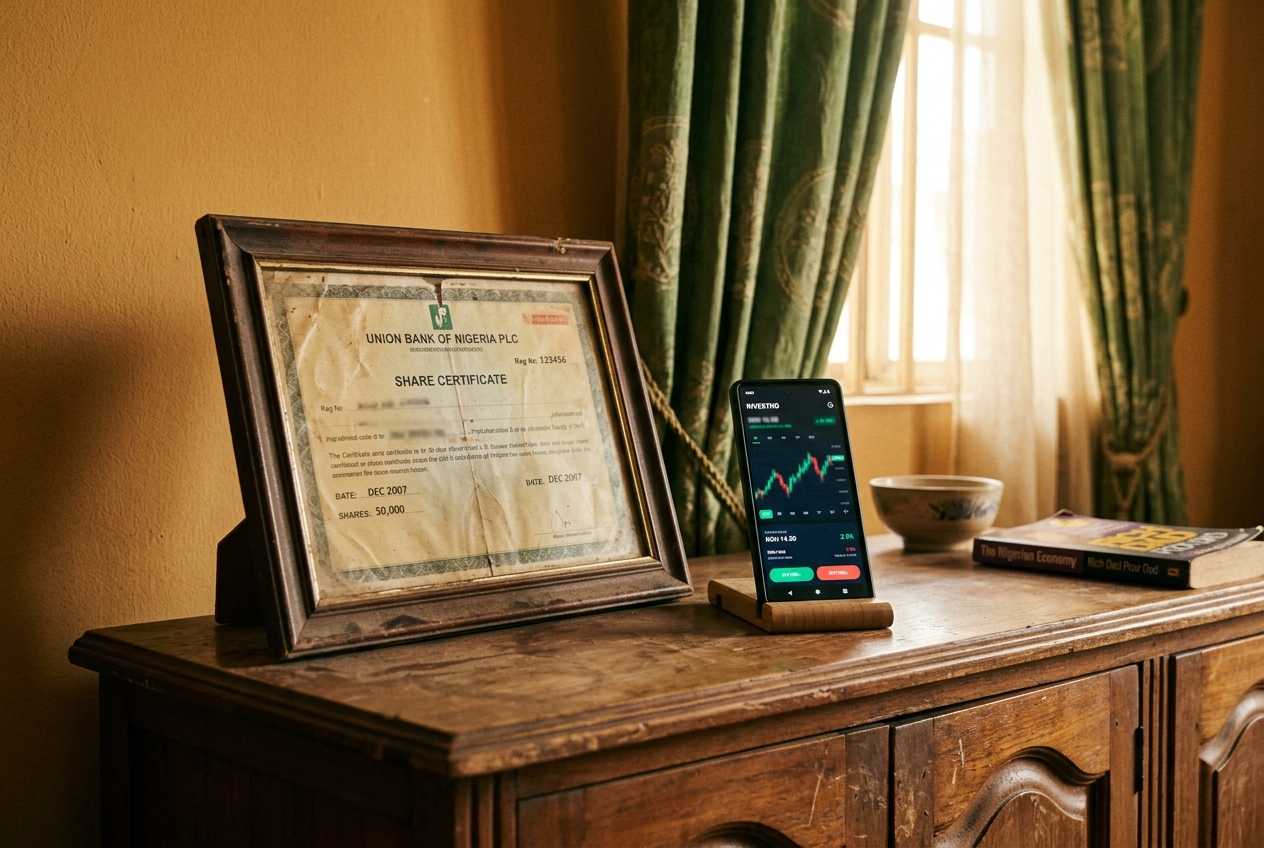
Nigeria's pension funds hold more than ₦20 trillion of ordinary people's retirement money, and the short answer to where it goes is this: most of it is lent to the federal government, a careful slice owns shares in Nigerian companies, and the rest is spread across cash-like instruments, loans to companies, and a small but growing sliver of infrastructure and property. It is built to be boring on purpose, because its one job is to still be there in thirty years.

This article is the research companion to the Naira Journal video on the same question. Watch it here: Nigerian Pension Funds Hold ₦20 Trillion. Where Does It Go?. None of what follows is financial advice. It is research into investing back home, shared openly.

What a pension fund actually is

A pension is money set aside now so a worker has an income later, after they stop working. Since Nigeria's 2004 reform, most formal-sector workers run on a contributory scheme: both the worker and the employer pay a fixed percentage of salary into a personal account every month. That account is called a Retirement Savings Account, or RSA.

The worker does not manage that money. A licensed company does. That company is a Pension Fund Administrator, a PFA. The PFA pools one person's contributions with millions of others and invests the lot, under the supervision of a regulator called PenCom, the National Pension Commission.

So when we say Nigeria's pension funds hold more than ₦20 trillion, we mean the PFAs are collectively managing more than ₦20 trillion of retirement money. That makes it one of the single largest pools of long-term money in the country. Picture a civil servant in Abuja, call him Emeka, whose salary is trimmed every month before he touches it. That trimming, multiplied across millions of workers and many years, is the pile. The question is where it flows next.

Destination one: government debt, the biggest slice

When the Nigerian government needs to spend more than it collects, it borrows. It borrows mainly by selling two things. An FGN bond, short for Federal Government of Nigeria bond, is a loan to the government for a set number of years in exchange for interest. A treasury bill, often called a T-bill, is the same idea for a short period, usually under a year.

The scale is large. Recent figures put outstanding FGN bonds at around ₦63 trillion and treasury bills at around ₦13 trillion, part of a public debt pile so heavy that the civic transparency group BudgIT frames it as a ₦159 trillion question for Abuja. And the biggest buyers of that debt are Nigerian banks and Nigerian pension funds. This market is anything but sleepy right now: Nairametrics reported in June 2026 that turnover in Nigeria's bond and T-bill market surged 137.49 percent amid a sharp rise in yields.

Sit with what that means. A large share of Emeka's retirement money is lent straight back to the same government that pays his salary. His future pension is funding today's roads, salaries, and budget gaps. That is not a scandal in itself, since government debt is the classic home for retirement money worldwide, but it does concentrate a lot of the nation's savings on one borrower.

Destination two: shares in Nigerian companies

A share is a small piece of ownership in a company. When a PFA buys shares in companies listed on the Nigerian Exchange, the NGX, the pension pool becomes part-owner of real Nigerian businesses: the big banks, the cement makers, the telecoms.

PenCom caps how much of the pool can sit in shares, because shares can fall as well as rise, and this is retirement money. So shares are a real but careful slice, not the bulk. When the NGX has a strong year, part of that strength is pension money flowing in and holding for the long term. Patient money, the kind that does not panic and sell on a bad Tuesday.

Destination three: everything else, spread on purpose

The remainder is deliberately scattered. A portion sits in money-market instruments, which are short-term, low-risk parking spots for cash, a bit like a high-grade savings account for institutions. Another portion goes into corporate bonds, which are loans to companies rather than to the government. A smaller, growing portion is allowed into alternative assets, including infrastructure funds that channel money into things like roads and power, and real-estate vehicles such as REITs, which are funds that own income-producing property. Nigeria's REITs and infrastructure funds now get tracked as a performance category in their own right, a sign the space is maturing.

Managed money is growing beyond pensions too. Nigeria's wider mutual fund industry, where a mutual fund is simply a professionally run pool that many people buy into, crossed ₦8 trillion in net assets by April 2026.

The part the headline number hides

The ₦20 trillion is real, and at the same time most Nigerians are barely touched by it. Both things are true. The system works mainly for people inside the formal sector, people like Emeka with an employer running deductions. Outside that, the picture is thin. Reports indicate that over 92 percent of personal pension savings accounts, the kind meant for self-employed and informal workers, remain unfunded. People open the account and nothing ever goes in.

Coverage is also uneven across the country. Some states run fully funded schemes. Others still operate outside the proper regulatory architecture, holding pension money in ordinary commercial bank accounts instead of through licensed administrators. And economic hardship is pulling at the pool from the other end: Pulse Nigeria reported in June 2026 that over 8,000 jobless Nigerians withdrew ₦12 billion from their pension savings.

The home lens and the diaspora lens

For a worker inside Nigeria, the practical takeaway is knowledge. The monthly deduction is not vanishing into a vault. It is lent to the government, invested in Nigerian companies, and spread across the economy under PenCom's rules. Knowing the map makes it easier to ask a PFA the right questions.

For those of us who left, there are two angles. First, anyone who worked in Nigeria's formal sector before moving abroad may still have an RSA sitting with a PFA, quietly invested all these years. The money did not vanish, but tracking it from abroad is genuine wahala: many PFA portals assume someone standing in a branch, and reconnecting often requires a verification step tied to a Bank Verification Number.

Second, studying where pension money goes is really studying the same menu open to an individual investor back home. Versions of the FGN bonds and T-bills the pensions buy are available to individuals. The shares the PFAs hold can be held through a fund. The honest framing is the same one the pension system itself uses: a broad, diversified fund is the calm core, and individual stock picks are an optional small satellite, not the main event. The PFAs do not bet the retirement of millions on one company, and nobody else has to either. And participation is optional; sitting a market out is always a valid choice.

On access, the friction has eased. A Nigerian bank account's app very likely has an investing tab selling managed funds, which is often the simplest on-ramp from outside the country. A dedicated broker app or an asset-manager fund are the other categories worth knowing. Pick the category that fits, not the loudest name. One honest note for anyone earning in dollars, pounds, or Canadian dollars: a fund can post a strong number in naira while the naira weakens against hard currency, so the return in dollar terms can be a good deal smaller. Always ask which number is being shown.

What it means for your naira

The ₦20 trillion is the quiet engine under the market Nigerians at home and abroad keep talking about entering. Its flows explain why government debt yields matter so much, why the NGX has a deep pool of patient money underneath it, and why diversified funds, not single stocks, are how the biggest professional money in Nigeria protects itself. For a contributor at home, the naira implication is that a slice of every payslip is already invested across the whole economy, so it is worth logging into that RSA and seeing it. For the diaspora, it is that the same instruments carrying the nation's retirement savings, bonds, bills, and broad funds, are the sober starting categories for any naira put to work back home, with the currency question asked out loud before celebrating any return.

Sources

  1. Nigeria's bond, T-bill market turnover surge 137.49% amid sharp rise in yields - Nairametrics. Nairametrics Accessed 2026-06-23T04:49:04.914186+00:00.
  2. How Nigeria’s REITs and Infrastructure Funds Performed as of May 2026. Nigeriahousingmarket Accessed 2026-06-23T04:49:04.914186+00:00.
  3. The N159 Trillion Question Nobody in Abuja Wants to Answer - The Budgit Foundation - Nigeria Budget Transparency. Budgit Accessed 2026-06-23T04:49:04.914186+00:00.
  4. Nigeria. Over 92% of personal pension savings accounts remain unfunded - Pension Policy International. Pensionpolicyinternational Accessed 2026-06-23T04:49:04.914186+00:00.
  5. Over 8,000 jobless Nigerians withdraw ₦12bn from pension savings amid economic hardship | Pulse Nigeria. Pulse Nigeria Accessed 2026-06-23T04:49:04.914186+00:00.